+86 531 68657995


What are Sodium Phosphate Monobasic Monohydrate? How do they work?
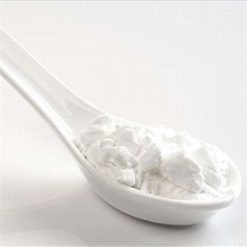
Sodium phosphate monobasic monohydrate, also known as sodium dihydrogen phosphate monohydrate, is a hydrate of sodium dihydrogen phosphate with one molecule of water of crystallization. Its molecular formula is NaH₂PO₄·H₂O, and its CAS number is 10049-21-5. It is a white crystalline powder, readily soluble in water, and its aqueous solution is weakly acidic (pH approximately 4.1-4.5 for a 1% solution).The dihydrogen phosphate ion is multifunctional, acting as a weak acid, a buffer, a ligand and a source of phosphorus. It is a food additive in beverages, baked goods and meat processing and an industrial raw material in boiler water treatment and metal phosphating. It covers many areas such as food, industry and scientific research, from drinks and biscuits on the table, to water treatment and metal processing in factories, to formulations and laboratory testing.
Basic information : Chinese name: Sodium dihydrogen phosphate monohydrate; English name: Sodium Phosphate Monobasic Monohydrate (also known as sodium dihydrogen phosphate monohydrate, sodium dihydrogen phosphate monohydrate, abbreviated MSP); CAS number: 10049-21-5; Molecular formula: NaH2PO4·H2O; Molecular weight: approximately 137.99; Appearance: white crystalline powder or granules; Easily soluble in water, insoluble in ethanol, ether, and chloroform; Aqueous solution is weakly acidic (pH of 1% aqueous solution at 25℃ is approximately 4.1-4.5); Density: approximately 2.04 g/cm³; Melting point: approximately 100℃ (after removal of water of crystallization); Odorless, hygroscopic.
Structurally , sodium dihydrogen phosphate monohydrate consists of a sodium ion, a dihydrogen phosphate ion, and a water of crystallization molecule. The phosphorus atom is at the center, forming a tetrahedron with four oxygen atoms. Two hydroxyl groups, an oxygen anion, and a double oxygen bond are connected. The dihydrogen phosphate ion carries a negative charge and is ionicly bonded to the sodium ion. The water molecule enters the crystal lattice as water of crystallization. The dihydrogen phosphate ion (H₂PO₄⁻) can switch between phosphoric acid, dihydrogen phosphate, and hydrogen phosphate depending on the ambient pH, giving it the functions of weak acidity, buffering, coordination, and phosphorus source—this is the structural basis for its widespread application in food, industry, and scientific research.
Physically , sodium dihydrogen phosphate monohydrate is a white crystalline powder or granules; it is readily soluble in water, but insoluble in ethanol, ether, and chloroform; its aqueous solution is weakly acidic (pH approximately 4.1-4.5); its density is approximately 2.04 g/cm³; its melting point is approximately 100℃ (after removing the water of crystallization); it is odorless and hygroscopic; it needs to be stored in a sealed, dry, and cool place.
Chemically , sodium dihydrogen phosphate monohydrate is an acidic salt: it dissociates into dihydrogen phosphate ions and hydrogen ions in water, making the aqueous solution weakly acidic; the dihydrogen phosphate and hydrogen phosphate ions form a buffer pair, providing pH buffering capacity; it can react with alkaline substances such as sodium bicarbonate to release carbon dioxide; it can chelate metal ions such as calcium, magnesium, and iron and react with metal surfaces to form a conversion film; it loses its water of crystallization and further dehydrates upon heating.
Why do sodium phosphate, monobasic, and monohydrate play such important roles in food, industry, and scientific research? Their mechanisms of action mainly include the following:
The phosphate multivalent equilibrium mechanism : dihydrogen phosphate bidirectionally converts between phosphoric acid, dihydrogen phosphate and hydrogen phosphate depending on pH, presenting different forms—the common basis for acidity regulation, buffering and pH control.
Acid-base buffer pair mechanism : The buffer pair composed of dihydrogen phosphate and hydrogen phosphate provides buffer capacity in the weakly acidic to neutral range, resisting pH fluctuations—a common mechanism in food, industrial and reagent buffering applications.
Coordination and conversion film mechanism : Phosphate groups coordinate with calcium and magnesium ions to inhibit scaling and react with metal surfaces to form a conversion film—the common basis for scale inhibition and metal phosphating in water treatment.
Gas production and water retention mechanism : The reaction of acid salts with alkaline leavening agents produces gas, which makes pastries fluffy; phosphate groups enhance the water retention of proteins, which keeps meat products tender—the functional mechanism of food processing.
Nutritional and phosphorus source mechanism: It contains absorbable phosphorus and sodium ions, which serve as a nutritional fortification source and a raw material for chemical synthesis, which is the common basis for dietary supplementation and the phosphorus chemical industry.
All uses of Sodium Phosphate, Monobasic, and Monohydrate
1.Food and Beverage Sector
Acidity regulator
As a food acidity regulator, it is used for acidity adjustment and flavor improvement in carbonated beverages, fruit juices, dairy beverages, and condiments.
Corresponding products: carbonated beverages, fruit juice beverages, compound seasonings, etc.
pH buffer
It acts as a pH buffer, working in conjunction with hydrogen phosphate to maintain pH stability during processing and storage.
Corresponding products: buffer salt systems, dairy buffers, flavoring buffers, etc.
leavening agents and acid agents
The acidic component of the leavening agent reacts with alkaline leavening agents such as sodium bicarbonate to produce gas, making biscuits, pastries and bread leaven.
Corresponding products: leavening agents, baking powder, biscuit and pastry premixes, etc.
Fermented nutrient source
It serves as a phosphorus source and nutrient component in fermented foods, promoting the growth and fermentation of microorganisms such as yeast.
Corresponding products: pastry starter, brewing nutrient salt, fermentation culture medium, etc.
2.Food processing sector
Moisture retention agent
It is used as a moisture retainer for meat and aquatic products to improve water retention, tenderness, and yield.
Corresponding products: ham sausage, luncheon meat, cooked meat products, processed aquatic products, etc.
Emulsifiers and stabilizers
It serves as an emulsifying and stabilizing agent for dairy products and frozen foods, maintaining the homogeneity of systems such as ice cream, dairy beverages, and processed cheese.
Corresponding products: ice cream, dairy beverages, processed cheese, frozen desserts, etc.
Metal ion chelating agents
It acts as a metal ion chelating agent, chelating metal ions such as calcium, magnesium, and iron to prevent oxidation and discoloration, and to help protect color and preserve freshness.
Corresponding products: food color protectants, antioxidant auxiliaries, preservation and processing aids, etc.
3.Nutrition and Dietary Supplements
Nutritional fortifiers
It is used as a phosphorus fortifier to supplement phosphorus in fortified foods and dietary supplements.
Corresponding products: fortified foods, dietary supplements, phosphorus-fortified drinks, etc.
4.Industrial water treatment and metal processing fields
Industrial water treatment agents
It is a scale inhibitor and pH adjuster for boiler water and circulating cooling water, provides calcium and magnesium scale prevention, and prevents pipe scaling and corrosion.
Corresponding products: boiler water treatment agents, circulating water scale inhibitors, water softeners, etc.
Phosphating agents and metal surface treatment
It is used as a metal phosphating agent, reacting with the metal surface to form a phosphate conversion film, which enhances corrosion resistance and adhesion of the coating.
Related products: phosphating solution, metal rust inhibitor, surface treatment agent etc.
Electroplating buffer
It acts as a buffer and pH adjuster in electroplating solutions, refining the grain size of the plating layer and improving its density and corrosion resistance.
Corresponding products: electroplating solution buffers, plating solution additives, electroplating chemical raw materials, etc.
5.Daily chemical cleaning and paper and textile industries
Detergent and cleaning additives
It acts as an adjuvant and buffering component in detergents and cleaning agents, enhancing their detergency, dispersion, and water softening effects.
Corresponding products: laundry detergent additives, cleaning agents, industrial cleaning agents, etc.
Paper pH buffer
It acts as a pH buffer and regulator for paper pulp, maintaining the acidity and alkalinity during papermaking and sizing processes.
Corresponding products: papermaking buffers, pulp pH adjusters, papermaking additives, etc.
Textile printing and dyeing and leather tanning auxiliaries
It is used as a pH buffer for dye baths and as a dyeing and printing auxiliary agent, and is also used for pH control in leather processing.
Corresponding products: dye bath buffer, dyeing and printing auxiliaries, leather processing auxiliaries, etc.
6.Building materials and chemical industry
Ceramic glaze additives
It is used as an auxiliary additive for ceramic glazes and bodies, participating in glaze formulation and process adjustment.
Corresponding products: ceramic glazes, raw material additives, building material chemical raw materials, etc.
Chemical Synthesis Raw Materials
It serves as a raw material and intermediate in the synthesis of phosphorus chemicals, providing phosphate groups to participate in the production of various phosphates and phosphorus-based products.
Corresponding products: phosphate intermediates, phosphorus chemical raw materials, chemical synthesis agents, etc.
Industrial buffer
It is used as a general industrial buffer for pH control and buffer system preparation in chemical, biochemical and detection processes.
Corresponding products: industrial buffers, process buffer salts, test buffers, etc.
7.Scientific Research and Reagents Field
Analytical Chemistry Buffers and Reagents
It serves as a standard buffer solution and biochemical reagent for analytical chemistry, used for pH calibration, buffer preparation, and biochemical analysis.
Corresponding products: standard buffer solutions, pH calibration solutions, biochemical analysis reagents, etc.
Summary
Sodium Phosphate Monobasic Monohydrate (CAS 10049-21-5) is a crystalline hydrate of sodium dihydrogen phosphate and consists of sodium ions, dihydrogen phosphate ions and one molecule of water of crystallisation. The dihydrogen phosphate ion changes between various phosphate forms depending on pH, possessing weak acidity, buffering properties, coordination properties, and phosphorus source functions, making it a versatile chemical applicable across multiple fields. It is an acidity regulator in carbonated drinks, a leavening agent in biscuits, a water-retaining agent in sausages, a scale inhibitor in boiler water treatment, a treatment agent for metal phosphating, a buffer in electroplating solutions, and a standard buffer solution reagent in laboratories. It has a special role as a phosphate, quietly undergirding every aspect of modern life. Knowing its structure as an acidic salt and its phosphate properties helps explain why it has become an important chemical with many functions.regulator in carbonated beverages, a leavening agent in biscuits, a water-retaining agent in sausages, a scale inhibitor in boiler water treatment, a treatment agent for metal phosphating, a buffer in electroplating solutions, and a standard buffer solution reagent in laboratories. With its unique role as a phosphate, it quietly supports all aspects of modern life. Understanding its acidic salt structure and phosphate characteristics helps explain why it has become a key chemical with multiple functions.